
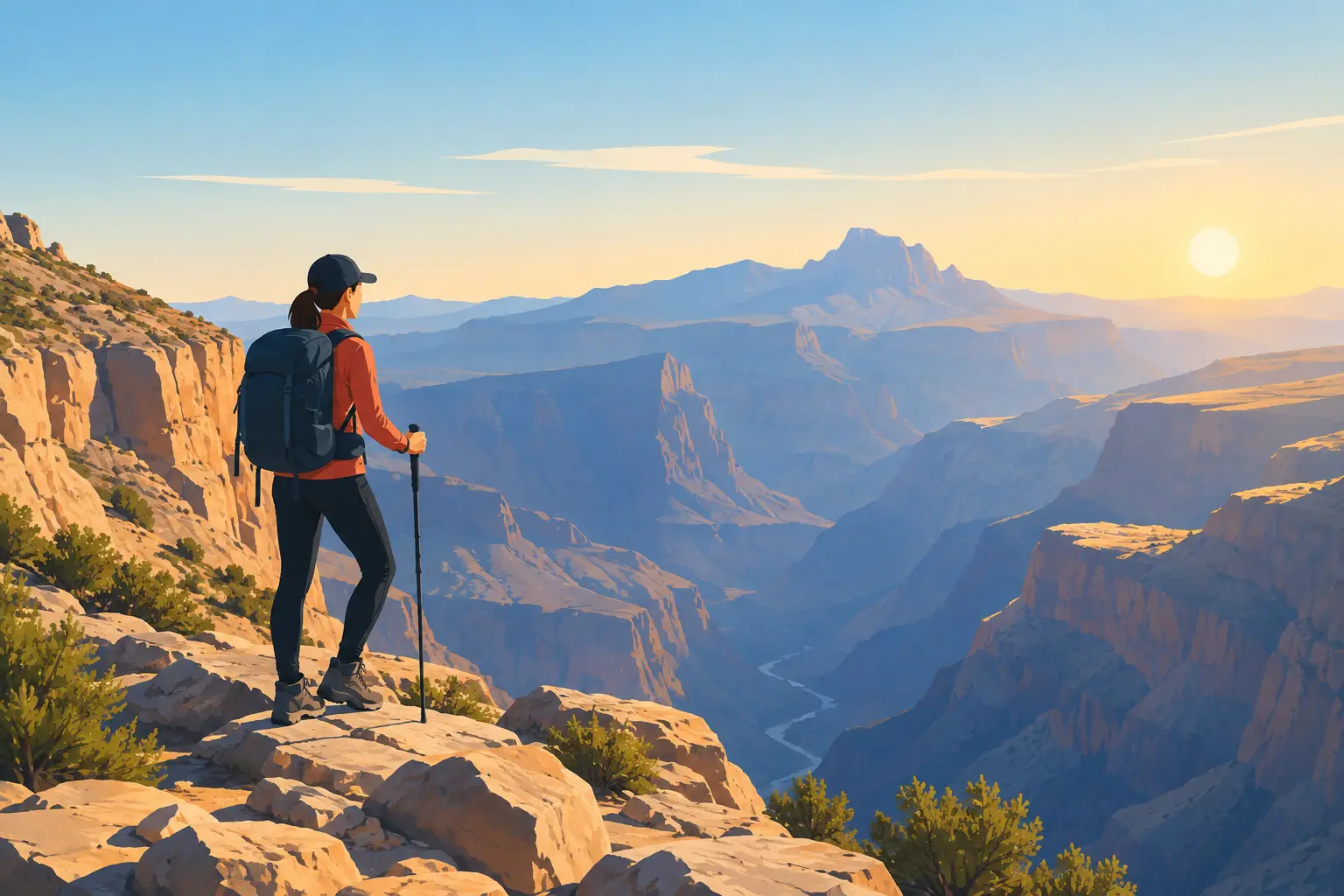
At more than 9,800 feet above sea level, Jebel Shams replaces Oman’s desert heat with open skies, cool mountain air, and a canyon so deep it is often called the Grand Canyon of Arabia. A Jebel Shams hiking tour is not simply a walk to a viewpoint. It is a chance to move through Al Hajar’s limestone cliffs, pass abandoned stone villages, and see a side of Oman that feels remote, raw, and remarkably welcoming.
For travelers based in Muscat, the mountain makes a memorable full-day adventure. It also fits naturally into a longer route through Nizwa, Jebel Akhdar, Wahiba Sands, and the coast. The experience you choose should depend on your fitness level, available time, preferred comfort, and the kind of landscape you want to remember long after the trip.
Why hike at Jebel Shams?
Jebel Shams is Oman’s highest mountain, but its real impact comes from Wadi Ghul below. From the rim, sheer walls fall dramatically into a vast gorge carved over centuries. The roads climb through villages, terraced fields, and stark rock formations before reaching the plateau near the hiking trailheads.
This is a destination for travelers who want more than a roadside photo stop. On foot, you notice the changing colors of the rock, the silence beyond the wind, and the old irrigation channels that once served mountain communities. In cooler months, the trail feels pleasantly fresh compared with the coast. During winter, overnight temperatures can become surprisingly cold.
A guided experience also adds context. Licensed Omani guides can explain the mountain landscape, local customs, and the story of villages such as As Sab, which sits along the famous Balcony Walk. They also help the day run smoothly, from hotel pickup and suitable vehicle selection to trail timing and a well-chosen lunch stop.
The Balcony Walk: Jebel Shams’ signature trail
The W6 Balcony Walk is the best-known hike in the area and a strong choice for active first-time visitors. The route begins near Al Khateem village and follows a ledge above Wadi Ghul toward the abandoned village of As Sab. The path offers sustained canyon views rather than one short lookout, which is why it is often the highlight of a Jebel Shams visit.
Expect a round trip of roughly 5 to 6 miles, usually taking three to four hours at an unhurried pace with time for photos and breaks. Although the route is generally manageable for people with reasonable fitness, it is not a casual city walk. The trail includes uneven rocks, loose gravel, exposed sections, and a few areas where careful footing matters.
At the end of the route, As Sab rewards hikers with crumbling homes, date palms, and signs of a community that adapted to an extraordinary setting. Some visitors continue toward the natural pools beyond the village when conditions allow, but this extension is more demanding and should not be treated as a guaranteed part of every hike. Rain, recent rockfall, time of day, and group ability all influence the right decision.
Is the Balcony Walk suitable for families?
It can be, especially for families with older children who are accustomed to walking on uneven ground and can follow safety instructions near drop-offs. A private tour gives families more flexibility to adjust the pace, add rest stops, or choose a shorter scenic walk instead.
For younger children, travelers with vertigo, or anyone recovering from an injury, the plateau viewpoints may be the better choice. They still deliver the scale of the canyon without committing to several hours on a rocky trail. A good mountain day should feel exciting, not pressured.
Choose the right Jebel Shams hiking tour for your trip
A day trip from Muscat usually starts early. The drive takes several hours each way, with changing road conditions as you approach the mountain. It is ideal for travelers with limited time who want a fully organized outing, but it makes for a long day. Starting from Nizwa or nearby mountain accommodations creates a more relaxed rhythm and leaves more time for hiking.
Travelers who enjoy independence may prefer a self-drive itinerary with a properly equipped 4WD vehicle. That option offers freedom, but it also requires confidence on mountain roads, careful navigation, and realistic timing. Fuel stations, services, and mobile coverage are not as consistent as in Muscat. Do not assume that every road shown on a map is suitable for a standard rental car.
For many visitors, a private guided trip is the practical middle ground. It combines a capable vehicle, a local driver-guide, trail knowledge, and a flexible itinerary without turning the day into a fixed group schedule. Majan Views Tourism can organize this kind of mountain experience with licensed Omani guides and transport suited to the route.
Overnight stays change the character of the visit. A mountain camp or lodge gives you time for sunset over the canyon, a clear night sky, and a quieter early start before day visitors arrive. It also makes sense for hikers who want to combine Jebel Shams with nearby forts, traditional villages, or another trail the following morning.
When to go and what conditions to expect
October through April is the most comfortable period for a Jebel Shams hiking tour. Daytime temperatures are usually suitable for walking, while the mountain air can feel cold in the early morning and after sunset. Layering is essential, particularly between December and February.
Summer hikes are possible only with more caution. The elevation is cooler than Muscat, but strong sun, exposed terrain, and a long approach drive can still make the day tiring. Begin early, carry more water than you think you will need, and choose a route that matches the heat and your fitness honestly.
Weather in Oman’s mountains can change quickly. Rain can make rocky surfaces slick and may affect access roads or wadi crossings. If clouds build or the forecast calls for unstable conditions, a professional guide may adjust the plan, select safer viewpoints, or recommend postponing the hike. That is not lost adventure. It is sound mountain judgment.
What to wear and bring on the trail
Footwear makes the biggest difference. Wear hiking shoes or trail-running shoes with reliable grip, rather than sandals or smooth-soled sneakers. Lightweight clothing works well during the day, but bring a windproof layer and a warmer top for higher elevations.
Carry a reusable water bottle or hydration pack, sunscreen, sunglasses, a hat, snacks, and a small personal first-aid kit. A charged phone is useful for photos, but do not rely on it as your only safety tool. Download maps in advance if hiking independently, and tell someone where you plan to walk.
Respectful clothing is also appreciated in mountain villages. Athletic clothing is fine for the trail, but avoid overly revealing outfits when passing through local communities. Oman is friendly and relaxed with visitors who show consideration for its customs.
Small decisions that make the day better
Start with a real breakfast, even if your pickup is early. Hiking at elevation with only coffee can catch up with you quickly. Keep a steady pace on the descent as well as the climb, since loose rock is often more tiring on the way back.
Bring cash for small local purchases, but do not expect a full range of shops once you are high on the mountain. Pack out every wrapper and bottle. Jebel Shams remains special because its rugged setting has not been overwhelmed by development, and every visitor has a role in keeping the trails clean.
Most importantly, leave room in the schedule for the unexpected: a longer photo stop, a conversation with a guide, or a quiet moment at the canyon edge. Jebel Shams is at its best when the itinerary gives you enough time to look up, slow down, and let Oman’s highest mountain set the pace.

Comment (0)