
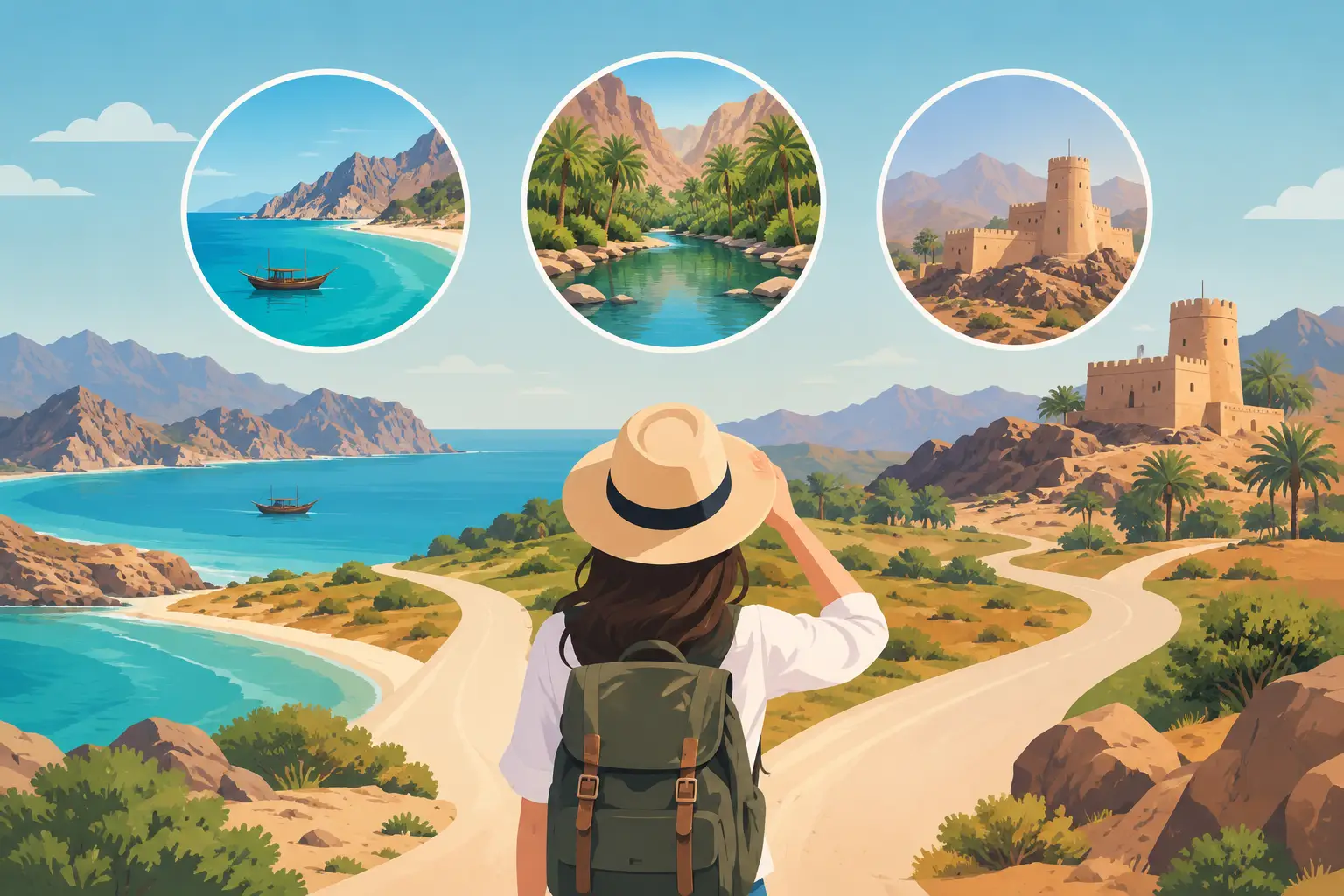
A sunrise over Muscat can lead to swimming beneath canyon walls, walking through a historic fort, or watching the desert turn copper before dinner. That range is what makes a one day tour in Oman so rewarding – and why choosing the right route matters. Oman is larger and more varied than it first appears on a map. A successful day is not about rushing through every landmark. It is about choosing one landscape, allowing time to experience it properly, and letting a local guide handle the roads, timing, and practical details.
For most travelers based in Muscat, the best day trips fall into four distinct experiences: the coast and wadis, the mountain forts and old towns, the high mountains, or the Wahiba Sands desert. Each has a different pace, travel time, and level of activity.
How to choose a one day tour in Oman
Start with the experience you want to remember most. If you picture clear water and a refreshing swim, choose Wadi Shab and the coast. If forts, souqs, and traditional villages are at the top of your list, the Nizwa region is the natural choice. If wide horizons and cooler air appeal to you, head into the Hajar Mountains. For dunes, camel-country scenery, and a stronger sense of adventure, make for Wahiba Sands.
The season also shapes the best decision. From October through April, every route is enjoyable, although mountain mornings and desert evenings can be cool. During warmer months, a wadi swim or a coastal activity is often more comfortable than a long afternoon in the dunes. Mountain tours remain appealing because elevations around Jebel Akhdar and Jebel Shams bring noticeably milder temperatures than Muscat.
A private vehicle gives you the greatest flexibility, particularly for families, couples, and small groups. You can begin early, adjust the pace, stop for photographs, and spend longer at a place that captures your attention. A licensed Omani guide adds more than directions: they explain the water systems behind the falaj channels, the stories held by the forts, local customs, and the realities of travel on mountain and desert roads.
Wadi Shab and the coast: for swimmers and scenery lovers
The journey from Muscat toward Wadi Shab follows the Gulf of Oman coastline, passing rugged cliffs and small fishing communities. It is one of the country’s most popular day-trip routes because the reward is active and immediate: a short boat crossing, a walk through the wadi, freshwater pools, and, for confident swimmers, the chance to reach the cave and waterfall farther inside.
This is not a sightseeing-only excursion. The hike involves uneven stones, heat, and swimming, so it suits travelers who are comfortable being active. Wear water shoes or sturdy sandals, bring a dry bag, and use modest swimwear out of respect for local customs. The route can be adapted for travelers who prefer a shorter walk, but reaching the inner pools takes time and energy.
A coastal day can also include Bimmah Sinkhole, where turquoise water sits inside a limestone depression, and a stop at Fins Beach or another quiet shoreline. It is a strong choice for a first visit to Oman because it combines dramatic geology, outdoor activity, and the pleasure of being near the sea. Start early. Wadi Shab is better when the trails are quieter and the midday sun is still manageable.
Nizwa and forts: for culture, crafts, and old Oman
A day trip to Nizwa offers a different kind of adventure. Rather than packing a swimsuit, bring curiosity for Omani history, architecture, and daily life. Nizwa Fort, with its massive circular tower and views across the old town, reveals the strategic importance of the interior. Nearby, the souq remains a living marketplace for dates, pottery, silver, spices, and traditional goods.
The route is especially attractive on a Friday morning, when the livestock market brings a vivid local tradition into view. It is worth planning around, but it requires an early departure and respectful observation. The market is not staged for visitors. It is a working gathering where buyers and sellers meet from surrounding communities.
Depending on timing, a Nizwa itinerary can include Bahla Fort, a UNESCO-listed landmark, or the mud-brick village of Al Hamra. Another option is Misfat Al Abriyeen, where narrow paths wind between old homes and cultivated terraces fed by falaj irrigation channels. Trying to fit Nizwa, Bahla, Al Hamra, and Misfat into one day is possible, but it can feel hurried. For travelers who value time to walk, photograph, and talk with their guide, choose two or three highlights rather than collecting stops.
Jebel Akhdar or Jebel Shams: for mountain scale
Oman’s mountains change the mood completely. The road climbs from the plains into landscapes of rock, terraces, and small villages perched above deep valleys. Both Jebel Akhdar and Jebel Shams make excellent full-day tours from Muscat, but they offer different experiences.
Jebel Akhdar, known as the Green Mountain, is ideal for travelers drawn to terraced farms, pomegranate orchards, rose gardens in season, and viewpoints over dramatic ravines. The villages of Al Ayn and Al Aqur show how mountain communities have adapted to steep terrain and scarce water. Spring is particularly memorable, when the Damask roses bloom and local families distill rose water.
Jebel Shams is the choice for bigger, rawer scenery. Its high viewpoints look across Wadi Ghul, often called Oman’s Grand Canyon, while the famous Balcony Walk follows a ledge toward an abandoned village. The trail is scenic but exposed in places, so it is best for travelers with a steady footing and enough time for a proper walk.
Both mountain routes require a capable 4WD vehicle for the upper sections. This is not the day to rely on an ordinary rental car or guess at road conditions. A professional driver-guide knows the mountain approaches, safe stopping points, and how to plan around changing weather. Bring a light jacket even when Muscat feels hot; temperatures can drop quickly at elevation.
Wahiba Sands: for dunes and desert atmosphere
If your Oman day must include the desert, Wahiba Sands delivers the classic image: long ridges of golden sand, tracks disappearing over the horizon, and Bedouin traditions rooted in a demanding landscape. The drive from Muscat is longer than many travelers expect, which makes a well-organized departure essential.
A desert experience is about more than a fast ride across dunes. With the right timing, it can include a stop at Wadi Bani Khalid, where palm-lined pools offer a striking contrast to the dry interior, followed by a 4WD drive into the sands. Some travelers prefer dune driving and sunset views; others want a quieter camp-style lunch, a short camel experience, or time to simply take in the silence.
The trade-off is travel time. A Wahiba Sands day tour is rewarding, but it is usually a long day and works best for guests who are comfortable with an early start and a late return. If the desert is your main reason for visiting Oman, an overnight camp often creates a richer experience. Still, a carefully planned day trip can be a powerful introduction for travelers with limited time.
What a well-planned day trip should include
The best itinerary is not necessarily the one with the most stops. It should have a clear route, realistic driving times, a vehicle suited to the terrain, drinking water, and enough space for spontaneous moments – a roadside date stall, a mountain viewpoint, or an unexpected herd of goats crossing the road.
With Majan Views Tourism, travelers can arrange private transport and an Omani licensed guide who knows the destination beyond the main photo stops. That local knowledge is particularly valuable in wadis, mountain roads, and desert areas, where conditions and access can change. It also means the day can be tailored around your group, whether you are traveling with children, celebrating as a couple, or looking for a more active challenge.
Bring sun protection, comfortable footwear, and a reusable water bottle on any route. For wadis, pack a towel and dry clothes. For mountains, add a layer for wind and cooler temperatures. For visits to villages, forts, and religious areas, choose clothing that covers shoulders and knees. Small preparations make the day more comfortable and show respect for the places and communities you visit.
Oman rewards travelers who leave room for wonder. Pick the route that matches your energy, let the road unfold at a human pace, and give yourself the chance to feel more than you photograph.

Comment (0)