
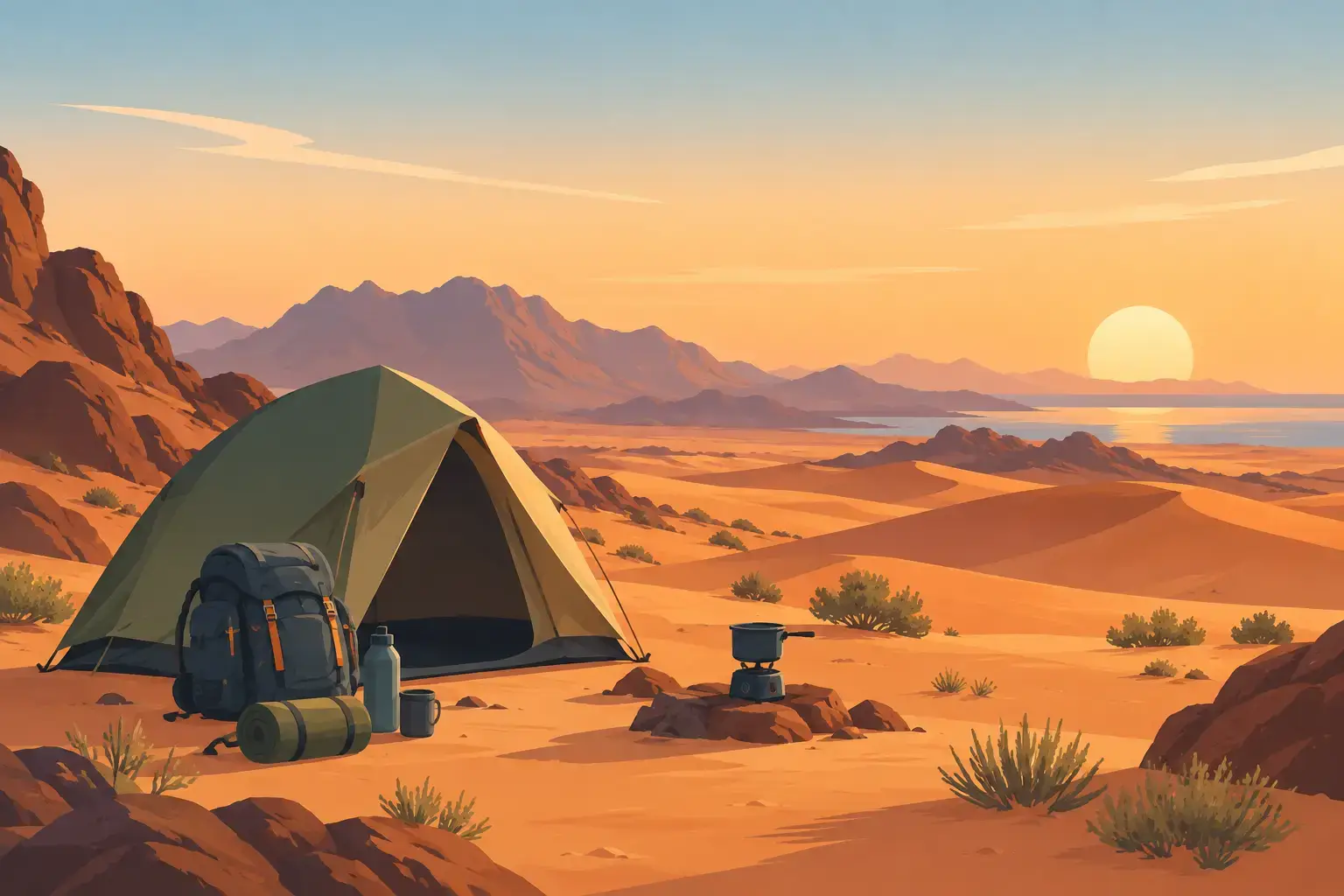
The first quiet moments after sunset in Oman’s dunes are unforgettable: the last light slips off the sand, the air cools quickly, and the sky becomes remarkably clear. But a desert night feels effortless only when the details have been planned well. If you are searching for préparer bivouac désert Oman, start with one principle: the desert rewards self-sufficiency, but it does not forgive casual preparation.
A bivouac in the Wahiba Sands, also known as Sharqiya Sands, can be as simple as a night at an established camp or as adventurous as a private setup far beyond the paved road. The right option depends on your driving confidence, travel season, group, and comfort expectations. Here is how to plan a night under Oman’s stars with the right balance of freedom, safety, and local know-how.
Choose the right kind of desert night
Not every desert camping experience requires the same preparation. An established desert camp is the easiest choice for first-time visitors, families with children, or travelers who want the atmosphere of the dunes without carrying camping equipment. You can usually expect a prepared tent or room, dinner, breakfast, and support from a local team. It is a comfortable way to enjoy sunset, traditional hospitality, and the silence of the sand.
A guided private bivouac takes you further. Your camp is set up in a quieter area, often with mattresses, bedding, a dining space, and a campfire prepared by the team. This format retains the feeling of sleeping in the open desert while removing the hard parts: finding a safe location, navigating soft sand, bringing sufficient water, and leaving no trace behind.
Independent camping offers the most flexibility, but it demands real desert experience. You need a suitable 4WD, knowledge of driving on sand, a reliable route, recovery gear, extra supplies, and a clear plan if conditions change. It is not simply regular car camping on a different surface. In the dunes, a wrong turn can quickly become a long delay.
Pick the season before you pack
The best period for desert camping in Oman generally runs from October through April. Days are pleasant enough for dune activities, while evenings can become surprisingly cold, especially from December to February. Bring layers even if Muscat felt warm when you left your hotel. A fleece or insulated jacket, long pants, warm socks, and a light beanie can transform your night’s sleep.
From May to September, desert heat is intense. Camping can still be arranged with experienced local support, but it requires greater attention to shade, hydration, and heat exposure. Families and travelers unused to extreme temperatures will usually enjoy a mountain, coastal, or wadi overnight stay more during the hottest months.
Weather in the desert is mostly dry, yet wind matters. Strong gusts can carry fine sand into tents, food, and camera equipment. Check the forecast shortly before departure and favor a camp setup that can be secured properly. A quality tent is helpful, but site selection is just as important: avoid exposed dune crests and low areas where rainwater could collect during a rare storm.
Preparing a desert bivouac in Oman: what to bring
Packing well is about comfort, safety, and avoiding unnecessary weight. In a supported camp, confirm what is provided before filling your bag. Bedding, meals, water, and lighting may already be included. For a private or independent overnight trip, bring the essentials yourself and pack them in soft bags or durable storage boxes that keep sand out.
Your core kit should include:
- A warm sleeping layer, even when daytime temperatures are high
- Closed-toe shoes or sturdy sandals, plus a spare pair of socks
- Sun protection: hat, sunglasses, sunscreen, and a light long-sleeve shirt
- A headlamp with spare batteries, rather than relying on a phone flashlight
- Reusable water bottles and personal snacks for the drive and early morning
- Wet wipes, hand sanitizer, personal medication, and a compact first-aid kit
- A power bank and a waterproof pouch for phones, cameras, and documents
Avoid bringing valuables you do not need. Sand gets everywhere, and changing light can make it easy to misplace small items. A scarf or neck gaiter is particularly useful when wind rises, both for your face and for protecting camera lenses.
Water deserves special attention. Do not judge your needs by the temperature at sunset. You need water for the drive, camp, dinner, nighttime use, and the morning departure. Guided experiences handle this calculation for you. If traveling independently, carry more than you think you will use and keep a separate emergency reserve that is not opened for cooking or washing.
Get the vehicle and route right
The approach to the Wahiba Sands can be straightforward, but driving deep among dunes is a specialized skill. A standard rental car is not suitable once pavement ends. Use a capable 4WD with good tires, sufficient fuel, a spare tire, and recovery equipment. Reduce tire pressure before entering soft sand only if you know how to reinflate afterward and have the correct compressor.
Never begin a dune route late in the afternoon without knowing exactly where you will camp. Darkness changes the landscape completely. Tracks disappear, distance is difficult to judge, and a small navigation error can leave you stuck in soft sand after sunset. Arrive with time to set up, walk your surroundings, and watch the changing colors before night falls.
Your route should be shared with someone outside your vehicle, along with a realistic arrival time. Mobile service can be inconsistent among the dunes. Offline maps are useful, but they are not a substitute for local expertise, especially when tracks have shifted after wind or rain. Travelers who want a remote camp without the pressure of self-driving can arrange a desert transfer with a licensed Omani guide through Majan Views Tourism.
Fuel up before leaving the main road. Bring a charged phone, a second means of navigation, and enough food and water to stay comfortable if your departure is delayed. If you get stuck, do not spin the wheels repeatedly. Stop, assess the sand around the tires, and use recovery boards or ask for support if you are traveling with a guide or convoy.
Set up camp with the desert, not against it
A good camp spot offers a level area, some protection from the wind, and enough distance from steep dune faces. Do not pitch your tent at the bottom of a slip face, where shifting sand can slide down. Avoid fragile vegetation and do not drive over shrubs simply to create a more scenic campsite. Those sparse plants are part of a harsh ecosystem.
As night arrives, temperatures fall quickly. Set up sleeping equipment before dinner, while there is still light. Keep one warm layer and your headlamp within reach, rather than buried at the bottom of a bag. If you are sleeping outside the tent, use a groundsheet or sleeping pad. The sand may look soft, but it loses heat rapidly.
Campfires are part of the desert experience, yet they need restraint. Use a designated fire area where possible, keep the fire small, and never leave it unattended. Wind can change direction quickly. Fully extinguish embers with water before sleeping or leaving, then scatter cooled ashes only where local regulations and your guide permit it. Do not burn plastic, food packaging, or treated wood.
Respect local customs and leave no trace
Oman’s desert is a place of natural beauty, but it is also a lived landscape. Bedouin communities, camel herders, and local families may use the same areas you cross. Dress respectfully, ask before photographing people, and drive slowly when passing homes, livestock, or other camps.
Take every piece of waste with you, including bottle caps, tissues, food scraps, and cigarette filters. Food left behind attracts animals and changes their behavior. Keep noise low after dark. A desert camp does not need loud music to feel festive – the wind, fire, and night sky are enough.
Morning is often the best part of the experience. Wake before sunrise, walk a short distance from camp, and watch the dunes shift from gray to gold. Have breakfast, check carefully for anything left in the sand, and leave the site looking as if no one had spent the night there.
The most rewarding desert bivouac is not the one with the most equipment or the most remote pin on a map. It is the one where you can relax into the silence because the route, camp, and safety details have already been handled with care.

Comment (0)