
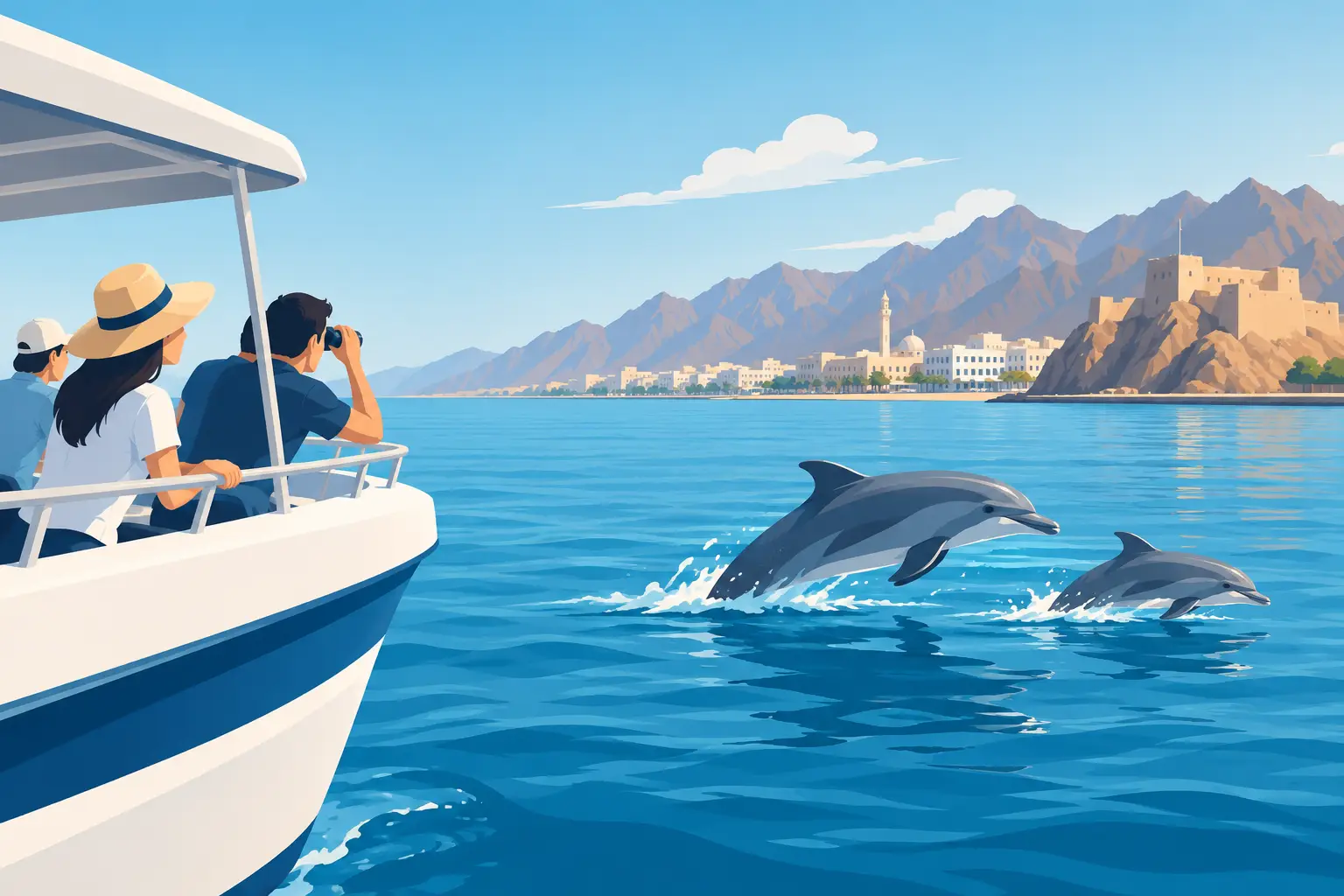
The first glimpse often comes without warning: a small flash of silver beside the boat, then several dolphins rising and falling together against Muscat’s rugged coastline. A muscat dolphin watching cruise is one of the easiest ways to experience Oman’s marine life, but it is far more rewarding when you know what conditions to expect, how to choose the right departure, and how to respect the animals you came to see.
From the water, Muscat looks different. The Hajar Mountains meet the Gulf of Oman in a line of rocky headlands, old watchtowers stand above sheltered coves, and the city’s waterfront gradually gives way to open sea. For couples, families, and travelers building a first Oman itinerary, this short adventure adds a relaxed and memorable contrast to forts, wadis, desert roads, and mountain trails.
What happens on a Muscat dolphin watching cruise?
Most dolphin trips leave from the marina in the Muscat area and head out along the coast on a speedboat or comfortable sightseeing vessel. The exact route changes with sea conditions and recent sightings. Captains and crew look for movement on the surface, seabird activity, and the familiar patterns of pods traveling or feeding offshore.
Spinner dolphins are among the species commonly seen in Omani waters, although sightings can never be promised. You may also encounter bottlenose dolphins or see turtles, flying fish, seabirds, and, on especially clear days, remarkable views of the mountains from the sea. The experience is not a marine park encounter. It is wildlife viewing in an open, changing environment, and that unpredictability is part of its appeal.
Cruises commonly last around two hours, which makes them easy to include in a day that also features Muscat’s cultural highlights. A morning outing can be paired with the Sultan Qaboos Grand Mosque, Mutrah Corniche, or the old city area. A later cruise may suit travelers who want a slower start or prefer to combine the outing with a coastal sunset experience.
Sightings are likely, not guaranteed
Oman’s coastline offers strong opportunities for dolphin sightings, but ethical operators should never present wildlife as guaranteed. Dolphins may be farther offshore, a pod may move quickly, or rougher water may make searching less comfortable. Weather, wind, visibility, and sea state all influence the day.
This is why a good cruise is about more than ticking off a sighting. It is also a chance to be on the Gulf of Oman with a crew that understands the coast, knows how to approach wildlife carefully, and can make the journey enjoyable even when nature follows its own schedule.
Best time for dolphin watching in Muscat
Morning is usually the best choice for a Muscat dolphin watching cruise. The sea is often calmer earlier in the day, the light is softer for photos, and temperatures are more comfortable before Muscat’s midday heat. Families with younger children may also find morning departures easier, as the ride is generally smoother when conditions are calm.
The cooler months, broadly from October through April, are especially pleasant for time on the water. Daytime temperatures are milder, making boat trips appealing alongside city touring and road journeys across northern Oman. That said, dolphin trips run in warmer months as well, and summer departures can still be enjoyable with an early start, shade, drinking water, and realistic expectations about the heat.
Sea conditions matter more than a calendar date. A clear winter morning may be ideal, while a windy day in any season can bring choppy water or a cancellation. Leave some flexibility in your Muscat schedule when possible. If your cruise is planned early in a longer trip, there may be time to reschedule if the weather does not cooperate.
Choosing the right boat trip for your group
Not every boat experience suits every traveler. A smaller speedboat often feels more adventurous and can be highly responsive when a pod is spotted, but it may also be bumpier. Larger boats generally offer more stability, more space to move around, and a calmer option for multigenerational families or guests who are unsure about being at sea.
Before booking, consider the group’s comfort rather than choosing only by price. Travelers prone to motion sickness may prefer a morning departure on a more stable boat. Families should check minimum-age policies, life jacket availability, and whether the crew is used to welcoming children. Couples may prefer a smaller shared cruise or a private outing for a more personal pace.
A private charter can be worthwhile for friends, families, or travelers celebrating a special occasion. It allows more control over departure time and can sometimes combine dolphin watching with snorkeling, swimming stops, or a sunset route. The trade-off is cost: a shared cruise gives excellent value for a short wildlife experience, while a private boat becomes more compelling when flexibility and privacy matter most.
Questions worth asking before departure
Confirm the departure marina, total duration, and the time you should arrive. Ask what safety equipment is provided, whether water is included, and what happens if weather conditions force a cancellation. If you are combining the cruise with snorkeling, check whether masks, fins, towels, or refreshments are part of the arrangement.
Also be honest about mobility needs and motion sensitivity. The crew can advise on the most suitable boat, but they need clear information before the trip begins. Taking motion-sickness medication in advance, if it is appropriate for you, is much more effective than waiting until the boat is already moving.
How to watch dolphins respectfully
The best dolphin encounter is one that leaves the animals undisturbed. Responsible crews keep a respectful distance, reduce speed near a pod, and avoid cutting across the dolphins’ path. Dolphins may choose to ride a boat’s wake for a moment, but the boat should never chase them, surround them, or pressure them to remain close.
As a guest, keep your movements calm and listen to the crew. Avoid leaning far over the side, throwing anything into the water, or demanding that the captain get closer for a photograph. A long-lens camera can be helpful, but a phone is enough if you focus on the moment rather than trying to capture every second.
Swimming with wild dolphins should not be assumed to be part of a standard sightseeing cruise. Even where swimming is permitted on another type of marine excursion, it depends on conditions, operator practices, and the animals’ behavior. Observation from the boat is often the most responsible and comfortable option.
What to bring on board
Pack lightly. Sunglasses with a strap, reef-safe sunscreen, a hat that will not blow away, and a small bottle of water cover the basics. Bring a light layer outside the hottest months, as wind on the water can feel cooler than the temperature on land.
For photos, secure your phone with a wrist strap or waterproof pouch. A dry bag is useful for cameras, passports, and electronics, particularly on a smaller boat. Wear non-slip sandals or shoes that can tolerate a little spray, and avoid loose scarves, wide-brimmed hats, or anything that can easily catch the wind.
If you tend to get seasick, eat a light meal beforehand rather than boarding on an empty stomach or after a heavy breakfast. Look toward the horizon, stay in fresh air, and choose a seat closer to the center or rear of the boat if the crew recommends it.
Add the cruise to a wider Oman journey
Muscat is a natural starting point for an Oman itinerary, and a dolphin cruise fits especially well on the first or last day of a trip. After landing, it offers a gentle introduction to the country’s coastline without requiring a long drive. Before departure, it provides one final experience that feels distinctly Omani: mountains, sea, warm light, and wildlife sharing the same horizon.
For travelers who want a fully coordinated route, Majan Views Tourism can combine a Muscat marine outing with airport or hotel transfers, licensed local guides, and onward travel to Nizwa, Wadi Shab, the Wahiba Sands, Jebel Akhdar, or Jebel Shams. This approach is useful when you want to spend your vacation experiencing Oman rather than managing separate transport and activity bookings.
A cruise also works beautifully after several active days inland. Following canyon walks, desert camping, or mountain drives, a couple of hours at sea brings a quieter kind of adventure. Keep your schedule open enough to enjoy it without rushing to the next stop.
When the dolphins appear, put the camera down for at least one pass of the pod. The memory that stays longest is usually not the perfect photo, but the sound of the water, the coastal cliffs in the distance, and the sudden joy of seeing wild dolphins move freely through Oman’s blue horizon.

Comment (0)