
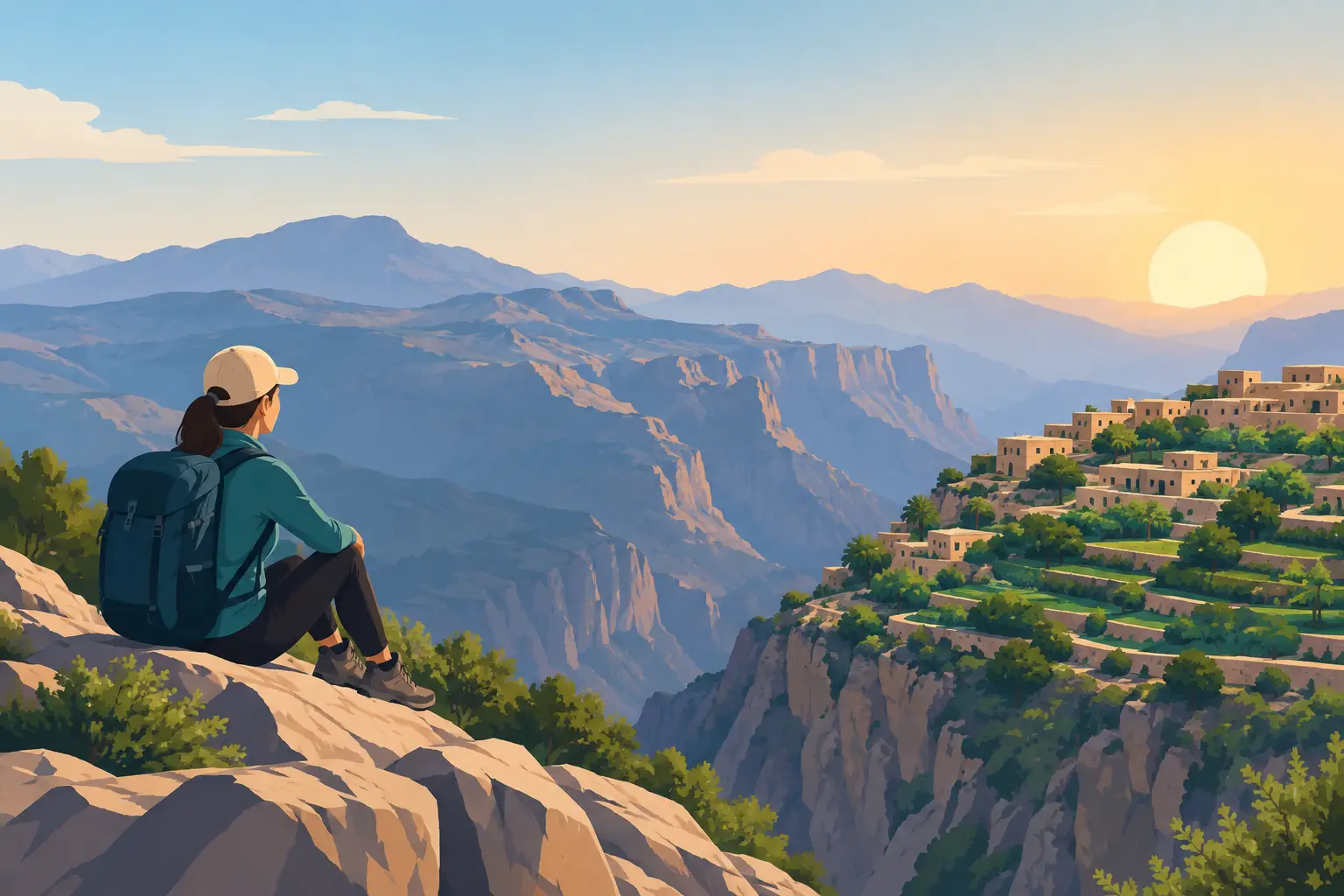
The road climbs sharply beyond Birkat Al Mouz, trading date palms and desert heat for high cliffs, cool air, and villages built into the mountainside. A Jebel Akhdar mountain tour is one of Oman’s most rewarding day trips or overnight escapes, but it is not simply a scenic drive. It is a journey into the Al Hajar Mountains, where ancient falaj irrigation channels still feed terraced farms and every bend reveals another canyon or plateau.
For travelers who want to experience Oman beyond Muscat’s coastline and Nizwa’s forts, Jebel Akhdar brings together nature, rural heritage, and real mountain adventure. The best experience depends on your pace: a well-planned day tour gives you the essential viewpoints and villages, while an overnight stay makes room for sunset, stargazing, and unhurried walks.
Why Choose a Jebel Akhdar Mountain Tour?
Jebel Akhdar means “Green Mountain,” a name earned by its cultivated slopes rather than dense forest. At elevations above 6,500 feet, the climate is noticeably cooler than the coast. In winter, evenings can feel genuinely cold; in summer, the mountain is a welcome retreat from the intense heat of Muscat.
The mountain’s character lies in the contrast. Vast, rocky canyons sit beside carefully tended terraces of pomegranates, walnuts, apricots, and roses. Stone villages appear almost as extensions of the cliffs. This is not a destination for ticking off one landmark and leaving. Its appeal is the changing landscape between stops: the mountain roads, local farms, open plateaus, and quiet trails.
A private tour is especially useful for couples, families, and small groups because timing can be adapted to the season and your interests. You may want more time at a viewpoint, an easy village walk with children, or a stop at Nizwa Fort before heading uphill. A licensed Omani guide adds the stories that turn a beautiful view into a place with meaning, from traditional irrigation methods to the rose harvest that has shaped local life for generations.
The Route: From Muscat or Nizwa to the Highlands
Most mountain journeys begin in Muscat or Nizwa. From Muscat, allow a full day for the round trip, usually with an early departure. The drive takes you through interior Oman toward Birkat Al Mouz, an oasis village known for its old mud-brick houses and date gardens. It is a natural place to pause before the ascent.
From Nizwa, Jebel Akhdar is closer and easier to combine with the city’s fort, souq, or nearby villages. This option often works well in a multi-day Oman itinerary, particularly after visiting the Wahiba Sands or before continuing toward Jebel Shams.
The climb from the checkpoint is steep and requires a four-wheel-drive vehicle. This is a practical requirement, not a marketing detail. The road is paved and well maintained, but the gradient is serious, and authorities check that vehicles are suitable for the route. Choosing an organized transfer with an experienced driver removes the concern of navigating the ascent, parking at remote viewpoints, and managing the return after dark.
Birkat Al Mouz and the Falaj Heritage
Birkat Al Mouz offers a glimpse of the agricultural world that sustains mountain communities. The village’s falaj system channels water through narrow open canals, distributing it to gardens according to long-established community rules. A short walk here provides a useful contrast to the high, exposed terrain waiting above.
It is also a good reminder that Jebel Akhdar is more than a resort landscape. The terraces and orchards are working spaces, maintained through knowledge passed between generations.
Villages, Terraces, and Canyon Views
The classic route across Jebel Akhdar includes several memorable stops, though the exact order should be shaped by your departure point and available time. Diana’s Point is one of the best-known viewpoints, with dramatic panoramas across deep ravines and rugged peaks. It is particularly striking in early morning or late afternoon, when the sun brings out the colors and contours of the cliffs.
Al Ayn is another important stop. Its traditional stone houses, terraced gardens, and quiet mountain setting offer a close look at village life. Walking trails pass through cultivated areas and along old paths, but visitors should stay respectful: these are living communities, not open-air museums. Dress modestly, ask before photographing people, and follow your guide’s advice around homes and farms.
Wadi Bani Habib is often included for its abandoned hillside village and broad views over the terraces. The walk down can be uneven, so sturdy walking shoes are a better choice than sandals. Travelers looking for a more active day can add a longer hike, but this should be planned honestly. Some routes are easy and scenic; others involve steep descents, loose stone, and exposure to the sun. Your fitness level, the season, and the ages of everyone in your group matter.
The Rose Season Is Brief but Memorable
From roughly late March through April, Jebel Akhdar’s Damask roses bloom across the terraces. Farmers gather the petals early in the morning and distill them into rose water using traditional methods. This is the most sought-after season for visitors, and accommodations can fill quickly.
Outside the bloom, the mountain remains deeply worthwhile. Summer brings green orchards and milder temperatures, while winter offers crisp days, clear visibility, and cozy evenings. If roses are your priority, build your itinerary around the harvest. If you prefer quieter trails and more flexible hotel choices, another season may suit you better.
Day Trip or Overnight Stay?
A day trip is ideal when time is limited. Leaving early from Muscat or Nizwa, you can experience the drive, visit Birkat Al Mouz, explore selected villages, pause at canyon viewpoints, and return before evening. It is efficient and full, especially for first-time visitors to Oman.
An overnight stay changes the rhythm completely. Instead of watching the clock, you can enjoy the mountain after day visitors leave, take a sunset walk along the plateau, and wake to cool, clear air. It also creates room for a slower itinerary that includes Nizwa, local farms, or a guided hike without compressing every experience into a single day.
For families, an overnight option can be the more comfortable choice. The transfer is long from Muscat, and children often enjoy the destination more when there is time for breaks, a pool, or a short walk rather than a packed schedule. For active travelers, two nights can support longer hikes and a more immersive look at the region.
Majan Views Tourism can organize the practical pieces together: suitable 4WD transport, licensed Omani guiding, carefully timed village visits, and accommodation or camping options that match your route. That local coordination is valuable in the mountains, where a good plan leaves room for the unexpected beauty of the road.
What to Pack for the Mountain
Weather changes quickly with elevation, so layers are essential even if Muscat is hot when you depart. Bring a light jacket for mornings and evenings, comfortable closed-toe shoes, sunscreen, sunglasses, and a reusable water bottle. A small daypack is useful for snacks and a camera, while modest clothing is appropriate for village visits.
In winter, add a warmer fleece or jacket. In summer, do not underestimate the sun simply because the air is cooler. For hikes, carry more water than you think you need and avoid setting out in the middle of the day. Mobile coverage can vary, another reason to travel with a guide or a driver who knows the region.
Make the Mountain Part of a Bigger Oman Journey
Jebel Akhdar works beautifully as part of a wider itinerary rather than a standalone stop. Pair it with Nizwa for forts, crafts, and the traditional souq. Continue toward Jebel Shams if canyon scenery and hiking are your priority, or return to the desert at Wahiba Sands for a complete contrast between highland terraces and rolling dunes.
The mountain rewards travelers who slow down enough to notice its details: water running through a centuries-old channel, rose petals drying in the sun, a village path opening suddenly onto a canyon. Plan the logistics well, then leave space for those moments. That is where Jebel Akhdar feels less like a stop on a map and more like the Oman you came to find.

Comment (0)