
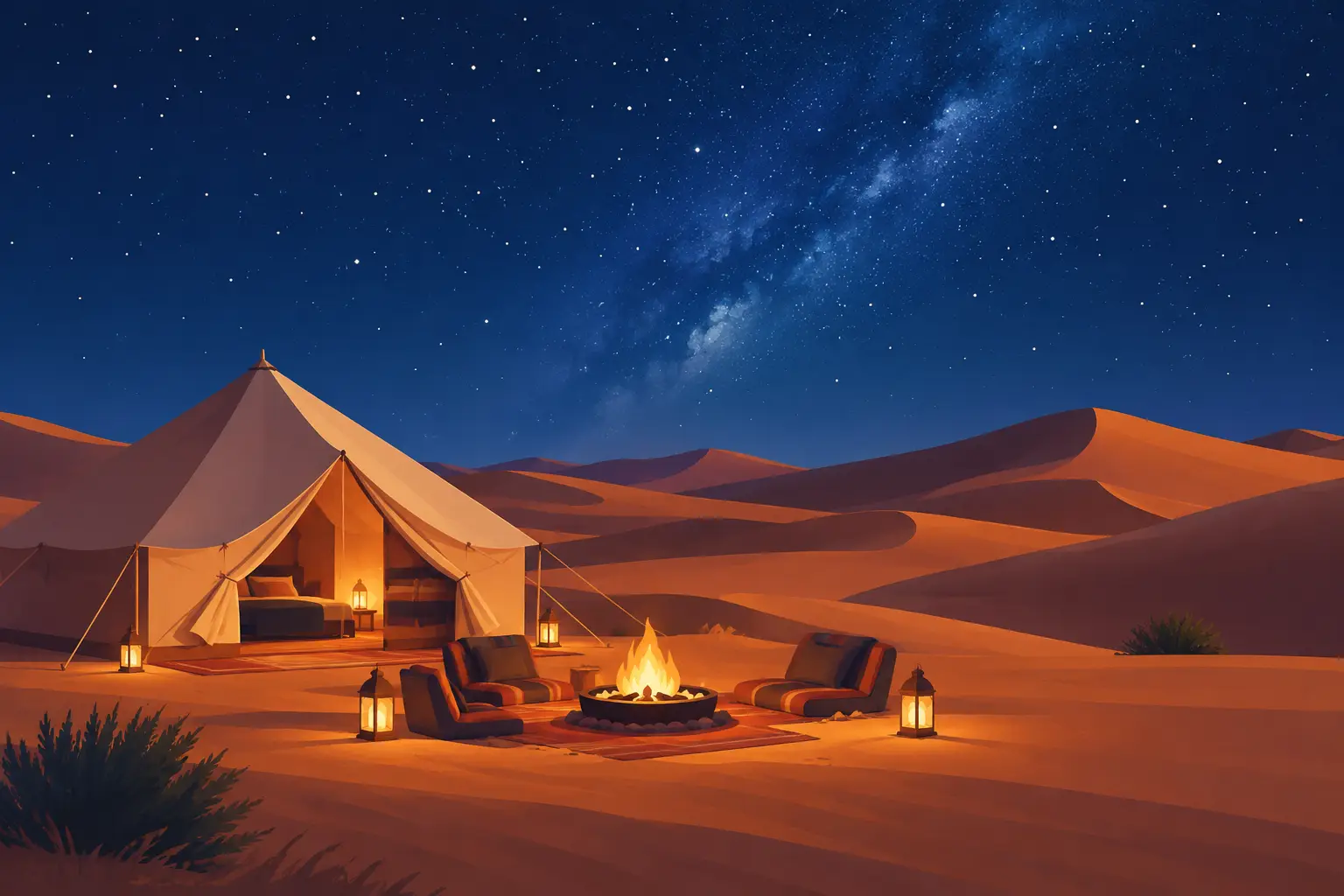
The last track disappears behind the dunes, the vehicle slows, and the desert becomes quiet enough to hear the wind reshaping the sand. A Wahiba Sands overnight camp is not simply a night away from the city. It is one of Oman’s most memorable changes of pace: a sunset over copper-colored dunes, a traditional dinner, and a sky filled with stars far from artificial light.
Also known as Sharqiya Sands, this vast desert lies within reach of Muscat, Nizwa, and the eastern coast, making it an excellent stop on a wider Oman itinerary. For couples, families, and friends, an overnight stay turns a desert excursion into a real experience of place. The key is choosing the right camp, transfer, and level of adventure before you leave the paved road.
Why choose a Wahiba Sands overnight camp?
Wahiba Sands is famous for its long ridges of shifting sand, which range from deep orange to pale gold depending on the light. Driving across them in a suitable 4WD is part of the experience, but it is only one part. The greater reward comes in the hours around it: watching the dunes soften at sunset, sitting outside after dinner, and waking up to early light before the heat arrives.
An overnight camp also gives travelers access to the desert at its best times of day. A day trip can show you the landscape, but it often misses the evening calm and the cool, clear morning that make the desert feel so vast. Staying overnight creates time for a measured pace rather than a rushed photo stop.
For many visitors, the encounter with local desert heritage is equally meaningful. The Sharqiya region has deep Bedouin roots, and a well-run camp can introduce travelers to the hospitality, food, coffee, and stories associated with life in this environment. It should feel respectful and genuine, not staged. Ask about the camp’s local ownership, staff, and cultural activities if this connection matters to you.
Choose the camp style that fits your trip
Desert accommodation in Wahiba Sands ranges from simple traditional camps to comfortable tented properties with private bathrooms, air conditioning, and restaurant-style dining. Neither is automatically better. Your best choice depends on your travel style, season, and who is traveling with you.
Traditional camp or a higher-comfort stay?
A traditional-style camp is ideal for travelers who want a closer connection to the desert. Rooms are often simple but welcoming, with carpets, low seating, lanterns, and shared or basic facilities depending on the property. The focus is on atmosphere, communal dining, and being outside when the temperature drops.
A higher-comfort desert camp suits families with young children, travelers who prefer a private bathroom, or anyone visiting during warmer months. Air-conditioned rooms can make a major difference from late spring through early fall, when daytime heat is intense. Comfort does not remove the sense of adventure – it simply makes the overnight stay easier after a day of travel.
Private camping is another option for travelers seeking more solitude. This requires careful organization: a safe site, appropriate equipment, food, water, vehicle access, and an experienced team that understands the conditions. It is a rewarding format for small groups, but it is not the same as arriving at a fixed camp with a ready-made room and dinner waiting.
What a desert afternoon and evening can include
Most overnight experiences begin at a meeting point near the edge of the sands, where travelers transfer into a 4WD vehicle. This is important. Deep sand driving requires the right vehicle, tire pressure, route knowledge, and recovery equipment. Self-driving is possible for experienced drivers, but it is not the right choice for everyone, especially on a first visit to Oman.
The drive to camp may include a dune crossing and a stop at a high ridge for sunset. Dune driving can be exhilarating, with steep climbs and flowing descents, but guides can adapt the pace for families or travelers who prefer a gentler ride. If you are prone to motion sickness, mention it before departure and avoid a heavy meal immediately beforehand.
At camp, there is usually time to settle in, walk a short distance into the dunes, or simply watch the colors change. Dinner often features Omani and Arabic dishes such as grilled meats, rice, salads, breads, and vegetarian options. Dietary requirements should be shared in advance, particularly for vegan, gluten-free, or allergy-sensitive meals.
After dinner, the desert delivers what many travelers remember most: stillness. Some camps offer music, a fire, camel rides, sandboarding, or guided stargazing. Others keep the evening deliberately quiet. There is value in both approaches. Travelers looking for a lively social atmosphere may enjoy a camp with activities, while couples and photographers may prefer a smaller property with less noise and fewer lights.
What to pack for one night in the dunes
Even a comfortable camp is still in the desert. Packing well makes the experience far more enjoyable. Bring a light jacket or fleece from October through March, when evenings and early mornings can feel surprisingly cool. Closed shoes or sandals with straps are more practical than flip-flops on the sand, and a scarf or light neck covering helps in windy conditions.
Sun protection matters all year. A hat, sunglasses, reusable water bottle, sunscreen, and breathable clothing are essential for afternoon activities. Keep your camera and phone protected from sand, and bring a portable charger because charging arrangements vary by camp.
For overnight comfort, a small flashlight is useful even if the camp provides lighting. Pack any personal medication in your day bag rather than in luggage stored elsewhere in the vehicle. If you plan to walk away from camp to photograph the stars, tell the staff where you are going and carry a light for the return.
The best season for a Wahiba Sands overnight camp
From October to April, conditions are generally most pleasant for desert travel. Days are warm, evenings are cooler, and outdoor dinners feel especially inviting. December through February can bring cool nights, so layers are essential even when the afternoon feels sunny.
May through September is much hotter. A desert overnight is still possible, particularly in an air-conditioned camp, but activities should be timed around the heat. Expect an earlier or later dune drive, slower walks, plenty of water, and more time indoors during the middle of the day. If your itinerary is flexible, the cooler season offers the broadest choice of camps and the most comfortable outdoor experience.
Weather in the desert is usually dry, but conditions can change. Strong winds can move sand across tracks, and rare rainfall can affect access roads in the surrounding region. Working with a local operator means routes and timings can be adjusted when conditions require it.
Add Wahiba Sands to a wider Oman route
The desert fits naturally into a multi-day journey through northern and eastern Oman. Travelers often combine it with Muscat’s mosques and waterfront, the forts and souks of Nizwa, the mountain landscapes around Jebel Akhdar, or the coastal city of Sur. A route through Wadi Bani Khalid is particularly popular, pairing freshwater pools and palm groves with an evening in the dunes.
The order matters. A long transfer followed by a late desert arrival can make the experience feel hurried, while a planned stop at a wadi or heritage town turns the day into a rewarding journey. Families may prefer a direct transfer and an earlier camp arrival. Active travelers might choose a more adventurous dune route or add a camel ride, sandboarding session, or sunrise walk.
Majan Views Tourism can organize the practical details as one coordinated experience, including 4WD transport, a licensed Omani guide, camp arrangements, and an itinerary that matches the rest of your trip. That local coordination is especially useful when traveling with children, managing different comfort expectations, or connecting the desert with Oman’s mountains and coast.
A few details that make the difference
Confirm whether your camp has private or shared bathrooms, air conditioning, electricity overnight, Wi-Fi, and alcohol policies before booking. Desert camps vary widely, and clear expectations prevent disappointment. It is also wise to confirm luggage arrangements, as large suitcases may remain in the main vehicle while you travel into the dunes with an overnight bag.
Respect for the landscape matters, too. Do not leave litter in the sand, avoid driving off established routes without experienced guidance, and keep noise low after dark. The desert’s beauty comes from its open space and fragile calm.
Give yourself enough time to arrive before sunset, step out of the vehicle, and let the noise of the road fall away. The most rewarding moments of a night in Wahiba Sands are rarely scheduled: a first view of the stars, warm Omani coffee after dinner, or sunrise spilling over the dunes outside your tent.

Comment (0)