
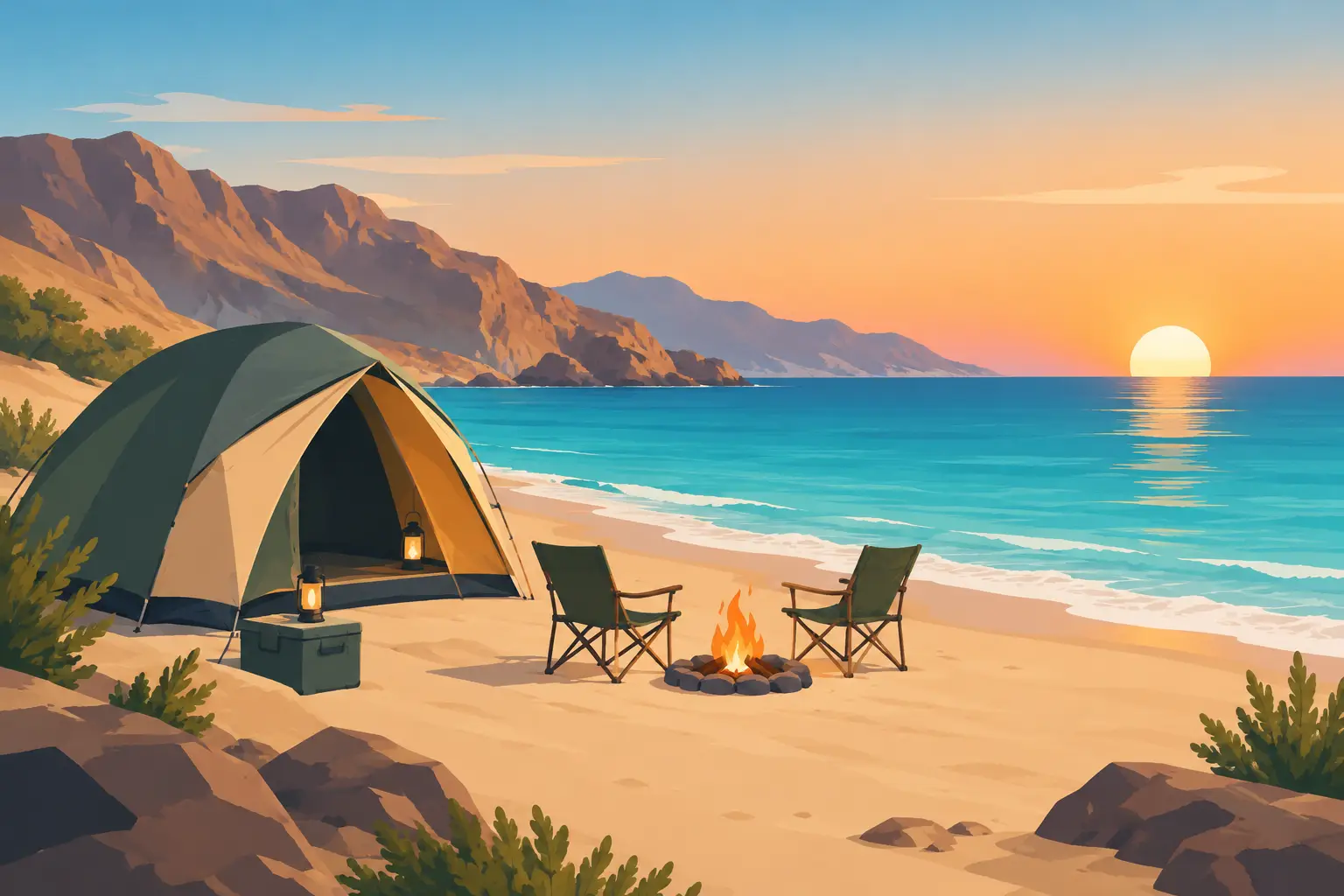
A quiet shoreline, a campfire under an open sky, and the sound of the Gulf of Oman or Arabian Sea outside your tent: an Oman beach camping experience brings the country’s wild coastline within reach. It is not a resort stay moved onto the sand. It is a chance to wake before sunrise, swim in clear water, share a simple dinner by the shore, and see a side of Oman that most day visitors miss.
For travelers who want nature without spending their vacation solving transport, permits, camp setup, and road conditions, local planning makes all the difference. The best beach camp is not simply the most remote one. It is the one that fits your route, season, comfort level, and the conditions on the day.
Why camp on Oman’s coast?
Oman’s coastline stretches for more than 1,800 miles, shifting from rocky coves near Muscat to broad beaches, turtle nesting shores, fishing villages, islands, and salt flats farther south. Beach camping offers a slower way to travel through these landscapes. Instead of returning to a hotel after a quick photo stop, you stay long enough to watch the colors change, hear fishing boats leave at dawn, and enjoy the sea after the crowds have gone.
It also works especially well within a multi-day itinerary. A coastal camp can connect Muscat with Wadi Shab, Sur, Ras Al Jinz, or the Wahiba Sands. On a longer journey, it can become a memorable stop between the capital and the remote shores of Al Khaluf or Masirah Island.
The trade-off is simplicity. Many beautiful beaches have no stores, bathrooms, shade structures, or cell service. That sense of freedom is part of the appeal, but it requires the right vehicle, enough water, good equipment, and a team that understands where conditions are suitable.
The best settings for an Oman beach camping experience
Fins and the Tiwi coast
South of Muscat, the Fins and Tiwi area combines pale beaches, limestone cliffs, and easy access to some of Oman’s best-known wadis. It is a strong choice for first-time visitors who want a beach night without traveling too far from the capital. A day can include a swim or hike in Wadi Shab, followed by a coastal camp and a relaxed evening by the water.
This section of coast is practical, but it is not always completely secluded. Weekends and public holidays can bring local visitors to popular beaches. Travelers seeking more privacy should choose their campsite carefully and travel with a guide who knows quieter stretches of shoreline.
Ras Al Hadd and the eastern coast
Near Sur, Ras Al Hadd offers a rawer coastal atmosphere, with long sandy beaches and traditional fishing communities nearby. It is a natural addition for travelers planning a turtle-watching visit around Ras Al Jinz. Camping and turtle experiences should be planned thoughtfully, however. Nesting beaches are sensitive environments, and wildlife viewing must follow local rules and designated access arrangements.
A night on this coast suits couples, families with older children, and small groups who want to pair marine wildlife with an outdoor overnight. The experience feels remote, while Sur’s services remain within reach.
Al Khaluf and the Sugar Dunes region
For wide-open scenery, Al Khaluf is one of Oman’s most striking coastal escapes. White sand dunes run toward the sea, creating a landscape that feels almost unreal in the low afternoon light. The nearby shoreline and tidal flats are known for birdlife, and the sense of space is extraordinary.
This is better suited to a longer route and a properly equipped 4WD journey. Distances are greater, services are limited, and the summer heat can be intense. In the cooler months, though, it is an exceptional choice for travelers who want to trade busy sightseeing days for silence, stars, and a horizon with no hotels in sight.
Masirah Island
Masirah Island is for travelers willing to go farther. Reached by ferry, it offers long beaches, wind-shaped landscapes, fishing villages, and a distinctly off-the-grid pace. It can be rewarding for nature lovers, photographers, and repeat visitors to Oman who want a less conventional route.
The island requires more logistical coordination than a coastal camp near Muscat or Sur. Ferry timing, weather, vehicle arrangements, and supplies all matter. It is precisely the kind of destination where an organized program can turn a complicated idea into a relaxed adventure.
What a well-organized beach camp looks like
The best coastal camps balance adventure with sensible comfort. Depending on the program, your setup may include a quality tent, sleeping mattresses, bedding, camp chairs, lighting, drinking water, and a freshly prepared dinner. A support team can handle the practical details while you enjoy the place itself.
With Majan Views Tourism, beach camping can be built into a private itinerary with licensed Omani guides, suitable land transport, and activities that match your interests. You might combine your overnight stay with snorkeling, a wadi visit, a sunset drive, a local seafood meal, or a stop in Sur. The goal is not to rush from one landmark to another, but to make the coast part of the journey.
For travelers who prefer more independence, a self-drive route can also work well. In that case, choose a vehicle appropriate for the road and beach conditions, confirm your intended camping area in advance, and carry reliable navigation and recovery equipment. Driving on soft sand is not the same as driving on paved mountain roads. Experience matters.
When to go beach camping in Oman
October through April is generally the most comfortable period for beach camping across much of northern and eastern Oman. Days are warm, evenings can be pleasantly cool, and outdoor dinners become one of the highlights of the trip. December and January may feel cooler after dark, especially with a coastal breeze, so a warm layer is useful.
From May through September, heat and humidity can make camping on many northern beaches less enjoyable. Conditions vary by region, and southern Oman follows a different seasonal rhythm due to the khareef in Dhofar. If you are traveling in summer, the route should be designed around the specific area, accommodation style, and weather conditions rather than assuming every beach camp will be comfortable.
Wind is another factor. A sunny forecast does not always mean a calm night by the sea. Local knowledge helps identify protected camp areas and avoid exposed stretches when the conditions change.
Pack for the coast, not just for the photos
A beach camp needs practical items, even when equipment and meals are provided. Sand, sun, saltwater, and wind ask more of your gear than a standard city stay. Bring a reusable water bottle, reef-safe sunscreen, a light long-sleeve layer, sandals for camp, closed shoes for rocky areas, and a small headlamp.
A dry bag is valuable for boat trips, snorkeling, or protecting electronics near the shore. Pack modest swimwear and a cover-up for public beaches, especially near villages or family areas. Oman is welcoming and relaxed in many outdoor settings, but respectful clothing remains the right approach.
If you are traveling with children, discuss the camp location and facilities before booking. A sheltered beach with a shorter drive may be better than the most remote option. For couples, a private setup and a sunset dinner can make the evening feel special without adding unnecessary complexity.
Camp responsibly on Oman’s beaches
Oman’s coast is beautiful because much of it remains undeveloped. Keeping it that way is part of the traveler’s role. Camp only where it is permitted and appropriate, follow guidance from local authorities or your operator, and never disturb turtle nests, birds, or marine life.
Take every item back with you, including food packaging and charcoal remains. Avoid driving over vegetation or tidal areas, and keep fires controlled and away from dry brush. If fishing boats or local families use the beach, give them space. A respectful greeting goes a long way, and it reflects the hospitality visitors often receive in return.
A beach night in Oman is not about checking off another place to sleep. It is about making room in your itinerary for the sea, the stars, and the quiet moments that turn a trip into a real memory.

Comment (0)